Stock trading has changed significantly with the growth of automation and artificial intelligence. Traders no longer have to depend entirely on manually watching charts, tracking price movements, and entering every order themselves.
An ai bot for stock trading can help automate parts of this process. Depending on the technology, an AI-powered system may analyze market information, identify predefined conditions, monitor trading activity, or help execute orders according to a strategy. However, there is an important distinction between automation and guaranteed performance.
AI can process information quickly and help reduce repetitive work, but it cannot eliminate market risk. Stock prices can move unexpectedly because of economic data, company announcements, geopolitical events, market sentiment, or other factors.
Financial regulators have also warned investors to be cautious about services that make unrealistic claims about AI-powered trading. FINRA specifically recommends researching automated trading providers and being skeptical of claims that AI can guarantee extraordinary returns.
The goal of intelligent automation should therefore be to make a trading process more structured and efficient—not to promise perfect trades.
Key Takeaways
- An AI trading bot uses software and data to automate selected trading tasks.
- Automation can reduce repetitive manual work and improve execution speed.
- AI does not guarantee profitable trades.
- A reliable system should have clear rules, controls, monitoring, and risk-management features.
- Traders should understand how a bot works before allowing it to execute trades.
- Backtesting and careful evaluation are important before relying on any automated strategy.
- Human oversight remains valuable, especially during unusual market conditions.
What Is an AI Bot for Stock Trading?
An ai bot for stock trading is software designed to use algorithms, data, and sometimes machine-learning techniques to assist with trading-related activities. Traditional trading often requires a trader to:
- Monitor the market.
- Identify a potential setup.
- Check predefined conditions.
- Decide whether to enter a trade.
- Place an order.
- Monitor the position.
- Exit according to the strategy.
Automation can handle some of these repetitive steps according to rules programmed into the system. More advanced systems may process large amounts of market data and use models to identify patterns or generate signals.
The exact capabilities vary widely. Some bots are simple rule-based systems, while others use sophisticated machine-learning models.
This is why traders should not judge a platform simply because it uses the word "AI." The important question is:
What does the technology actually do?
FINRA notes that AI is already being explored in securities trading for areas such as smart order routing, price optimization, best execution, and allocation. At the same time, autonomous systems can create additional risks when market conditions change beyond what the model has experienced.
How Does an AI Trading Bot Work?
While systems differ, most automated trading solutions follow a basic process.
1. Collecting Market Data
The system receives information that may include:
- Price movements
- Trading volume
- Market indicators
- Historical data
- News or other information, depending on the system
- Account and position information
The quality of the data matters. Poor or incomplete information can produce poor results.
2. Analyzing Conditions
The software evaluates the available information against its programmed rules or models. For example, a strategy could look for a particular combination of price movement, volume, and technical indicators.
3. Generating a Signal
If the required conditions are met, the system can generate a trading signal. A signal might indicate that a particular setup deserves further attention or that a predefined trading condition has been satisfied.
4. Executing the Trade
If the system is configured for automatic execution, it may send the appropriate order through its connected trading infrastructure.This is one of the major advantages of automation: the system does not need to wait for someone to manually type an order.
5. Monitoring the Position
After execution, automated software can continue monitoring the trade according to the strategy's rules. This can include tracking entry and exit conditions, position status, and other predefined parameters.
6. Reviewing Performance
The final step is often overlooked. Traders should review:
- Winning and losing trades
- Execution quality
- Drawdowns
- Strategy performance
- Trading frequency
- Errors or unexpected behavior
Performance analysis helps traders understand whether the system is actually supporting their strategy.
Step-by-Step: How AI Automation Supports Trading
Imagine a trader has a strategy based on specific market conditions. Without automation, the trader may spend hours watching charts. With an automated system, the workflow could look like this:
Step 1: The trader defines the strategy.
Step 2: The system monitors relevant market activity.
Step 3: The software checks whether predefined conditions are met.
Step 4: A signal is generated when those conditions occur.
Step 5: If automatic execution is enabled, the order is sent according to the configured rules.
Step 6: The system monitors the position.
Step 7: The trader reviews the results and adjusts the strategy when necessary.
This does not mean the bot "knows" what the market will do. It means the software can consistently follow a defined process without requiring the trader to perform every repetitive action manually.
Benefits of Using AI in Trading
Faster Execution
Markets can move quickly. Automation can help reduce delays between identifying a predefined setup and executing an order.
Less Repetitive Work
Constantly monitoring charts can become exhausting. Automation can handle repetitive tasks while allowing traders to spend more time on strategy development and analysis.
More Consistent Execution
Human traders can hesitate, enter trades late, or forget parts of their strategy. A properly configured automated system can follow the same rules repeatedly.
Real-Time Monitoring
Automation can monitor market activity continuously during the periods it is configured to operate. This can be particularly useful for traders who manage multiple instruments or accounts.
Multi-Account Management
Some trading automation platforms also allow trades to be copied across connected accounts. ProfitPlus, for example, focuses on futures trading automation and supports trade copying across multiple accounts, alongside real-time monitoring and automated execution.
Better Workflow
The biggest benefit may not be "more trades." It can simply be a cleaner trading workflow. Instead of repeatedly performing mechanical tasks, traders can focus on:
- Strategy development
- Risk management
- Performance analysis
- Market research
- Improving their trading process
What Makes a Good Stock Market AI Bot?
Not every stock market ai bot is built the same way. Before using an automated system, look beyond marketing claims.
Clear Strategy
You should understand what the system is designed to do. A platform that simply says "AI-powered" without explaining its functionality deserves additional scrutiny.
Transparent Controls
Look for tools that let you understand and control important settings. Depending on the platform, these may include:
- Entry conditions
- Exit conditions
- Position size
- Trading hours
- Account connections
- Execution settings
- Risk controls
Monitoring and Reporting
A good system should make it possible to review what happened. Trade history, execution information, and performance reporting can help users evaluate their process.
Reliable Infrastructure
Technology failures can create problems in automated trading. Connection issues, software errors, delayed data, and execution problems are all important considerations.
Human Oversight
Automation should not mean ignoring your account. FINRA recommends that investors continue monitoring automated trading activity and make sure it remains consistent with their objectives and risk tolerance.
Practical Example of AI-Assisted Trading
Consider a hypothetical trader who uses a strategy based on several technical conditions. The trader's manual process might look like this:
Watch charts → identify setup → confirm conditions → place order → monitor position → exit.
Now imagine some of those steps are automated.
The software monitors the market and checks for the predefined conditions. When the setup appears, the system can generate or execute the appropriate action based on its configuration.
The trader can then review the trade and evaluate whether the strategy performed as expected. The important point is that automation does not magically transform a weak strategy into a strong one. If the underlying strategy is poorly designed, automation may simply execute poor decisions faster.
Automation improves a process. It does not automatically improve the logic behind that process.
Common Mistakes Traders Should Avoid
1. Believing AI Guarantees Profits
This is perhaps the biggest mistake. No legitimate technology can remove all market risk. Be particularly cautious about claims involving guaranteed returns or systems that supposedly "never lose." FINRA has specifically warned investors about exaggerated claims surrounding AI-powered auto-trading services.
2. Choosing a Bot Only Because It Uses AI
"AI" is not a quality guarantee.
Ask:
- What data does it use?
- What does the model actually do?
- How are trades generated?
- Can the strategy be tested?
- What controls are available?
3. Ignoring Risk Management
A sophisticated bot still needs sensible risk parameters.
Consider factors such as:
- Position size
- Maximum acceptable loss
- Trading frequency
- Exposure
- Account allocation
- Stop conditions
4. Skipping Testing
Do not immediately trust a strategy with significant capital.
Where appropriate, traders can evaluate strategies using historical data, simulations, paper trading, or smaller-scale deployment before increasing exposure.
5. Forgetting About Changing Markets
A strategy that worked under one market environment may behave differently under another. Unusual volatility, major economic events, geopolitical developments, and other unexpected conditions can challenge automated models. FINRA has highlighted this as an important risk for autonomous AI trading systems.
6. Giving Away Sensitive Account Information
Security should always be taken seriously. FINRA advises investors to be particularly careful when an auto-trading service requests brokerage credentials or other sensitive information.
Is AI Trading Completely Automatic?
Not necessarily. The word "automation" can describe many different levels of technology. A system may simply provide signals. Another may automate order execution. A more advanced platform may monitor positions and execute multiple predefined actions automatically. This distinction matters.
Before using an ai bot for stock trading, determine exactly which activities are automated and which remain under your control.
How to Choose the Right AI Trading Tool
Use this checklist before committing to an automated trading platform:
- Understand the product. Know what it actually automates.
- Research the provider. Check its reputation and available information.
- Review costs. Understand subscription, transaction, and other applicable fees.
- Look for transparency. Avoid vague technology claims.
- Understand security. Know how account information and credentials are handled.
- Test the strategy. Use appropriate testing methods before taking significant risk.
- Check risk controls. Make sure the system fits your trading approach.
- Monitor performance. Automation does not remove the need for oversight.
- Avoid unrealistic promises. Guaranteed returns are a major warning sign.
FINRA recommends researching automated trading providers, understanding their limitations, and being skeptical of unsupported performance claims.
FAQs
1. What is an AI bot for stock trading?
An AI bot for stock trading is software that uses algorithms, data, and sometimes machine-learning techniques to assist with trading activities. Depending on the system, it may analyze information, generate signals, monitor markets, or automate order execution.
2. Can an AI trading bot guarantee profits?
No. An AI bot cannot guarantee trading profits. Markets are unpredictable, and automated systems can experience losses. Be cautious of platforms that promise guaranteed or unusually high returns.
3. Is an AI trading bot suitable for beginners?
It can be useful for learning about automation, but beginners should first understand the strategy, risks, fees, and controls involved. Using automation without understanding how it works can create unnecessary risk.
4. What is the difference between an AI bot and a traditional trading bot?
A traditional trading bot may primarily follow predefined rules, while an AI-based system may use machine-learning or other advanced data-processing techniques. However, the terms are sometimes used loosely, so traders should examine what a platform actually does rather than relying on the label.
5. Should traders completely rely on AI?
No. AI can support trading processes, but human oversight remains important. Traders should monitor automated activity, understand the system's limitations, and make sure its behavior remains aligned with their strategy and risk tolerance.
Conclusion: Is Intelligent Automation the Future of Trading?
The rise of the ai bot for stock trading reflects a broader change in how people approach financial markets. Technology can monitor information quickly, automate repetitive processes, support faster execution, and help traders maintain a more structured workflow.But intelligent automation should not be confused with guaranteed success. The strongest approach is to view AI as a tool rather than a magic solution.
A good trading process combines:
- A clearly defined strategy
- Reliable technology
- Sensible risk management
- Careful testing
- Performance monitoring
- Human judgment
The same principle applies to futures trading automation. ProfitPlus, for example, is designed around automating futures trade execution, real-time monitoring, and multi-account trade copying, helping traders reduce repetitive manual tasks and manage their trading workflow more efficiently.
As automated trading technology continues to develop, the traders who benefit most will likely be those who understand both its potential and its limitations. If you're exploring automated trading, take the time to understand the technology, test your strategy, and choose tools that give you meaningful control over your trading process.
Explore ProfitPlus to learn more about automated futures trading and how technology can simplify your trading workflow.
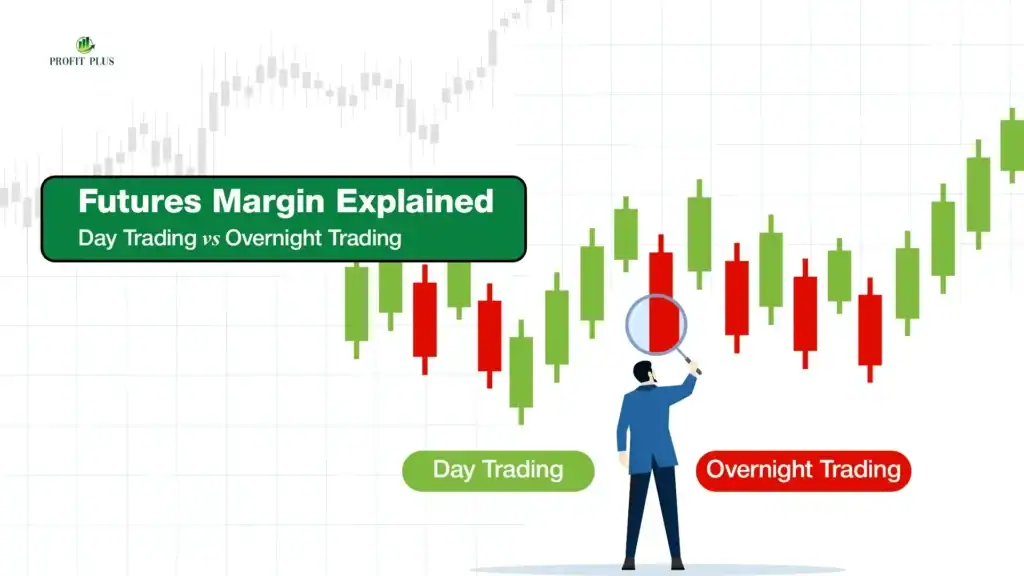
Futures trading gives traders the opportunity to control large market positions with a relatively small amount of money. This is possible because of the margin. However, many traders in the United States do not fully understand the difference between day trading margin and overnight margin. This misunderstanding can lead to unnecessary risk, margin calls, and account losses.
In this detailed guide, you will clearly understand how futures margin works, how US brokers apply day and overnight margin rules, and how you can manage risk like a professional trader.
What is Futures Margin and How Does It Work
In futures trading, margin is not a loan. It is a performance bond or good faith deposit required by your broker to open and maintain a position. The exchangesets minimum margin requirements to protect the financial system from large losses.
When you trade futures, you are required to deposit an initial margin. This is the amount needed to open a contract. After the trade is active, you must maintain a minimum balance called maintenance margin. If your account falls below that level due to losses, you may receive a margin call.
Futures contracts are marked to market daily. This means profits and losses are settled at the end of each trading day. If you make money, it is added to your account. If you lose money, it is deducted immediately.
Margin allows traders to use leverage. For example, controlling a contract worth 100,000 dollars might require only 5,000 to 15,000 dollars in margin. While this increases profit potential, it also increases risk.
Understanding Day Trading Margin in Futures
Day trading margin is the reduced margin requirement offered by brokers for positions that are opened and closed within the same trading session. Many US brokers provide lower intraday margins to attract active traders. Since the position is not held overnight, the broker faces less risk from unexpected news or market gaps.
For example, a futures contract that requires 12,000 dollars for an overnight margin may require only 1,000 to 2,000 dollars for a day trading margin. This allows smaller account traders to participate in active intraday strategies.
However, this reduced margin comes with strict conditions. You must close your position before the broker’s cutoff time, which is usually near the end of the regular trading session. If you fail to close the position, the full overnight margin requirement automatically applies.
Day trading margin is popular among:
- Scalpers who trade small price movements
- Intraday momentum traders
- Technical traders who avoid overnight risk
- Traders with smaller account sizes
The main advantage is lower capital requirements. The main risk is high leverage. Because margin is small, even a minor price movement against your position can create large percentage losses.
Professional traders using day margin focus heavily on risk management, position sizing, and strict stop loss discipline.
What is Overnight Margin in Futures Trading
Overnight margin applies when you hold a futures position beyond the end of the trading session. This is also called initial margin or full exchange margin.
Unlike day margin, overnight margin is primarily set by the exchange such as CME Group. Brokers must follow these requirements and cannot reduce them significantly.
Overnight positions carry more risk because markets can move due to economic reports, global events, political news, earnings announcements, or unexpected market shocks. These events can cause price gaps when the market reopens.
Because of this additional risk, overnight margin is much higher.
For Example, an Index futures contract may require:
- 1,500 dollars for day trading margin
- 12,000 dollars or more for overnight margin
The higher margin protects brokers and clearing firms from large unexpected losses.
Overnight Trading is Commonly Used By:
- Swing traders holding positions for several days
- Position traders following longer trends
- Hedgers managing portfolio risk
- Institutional traders
While overnight margin requires more capital, it reduces forced liquidation risk because you are meeting the full exchange requirement.
Major Differences Between Day Trading and Overnight Margin
The core difference is the amount of capital required and the level of exposure to risk outside regular trading hours. Day trading margin is lower and designed for short term traders who exit before the market closes. Overnight margin is higher and required for positions held beyond the session.
Day traders avoid overnight news risk but face intraday volatility. Overnight traders accept gap risk but often trade with wider stop losses and longer strategies. Another important difference is broker enforcement. If your account does not meet overnight margin requirements by the cutoff time, brokers may automatically liquidate your position. This is common in highly volatile markets.
Understanding these operational rules is critical. Many new traders mistakenly assume they can hold a position overnight with only day margin capital. This often leads to unexpected liquidation.
How Volatility Impacts Margin Requirements
Margin requirements are not fixed forever. Exchanges regularly adjust margin based on market volatility. During periods of high uncertainty such as financial crises, major economic events, or extreme price swings, exchanges increase margin requirements to reduce systemic risk.
When volatility decreases, margin requirements may be lowered. This is important because a trader holding overnight positions must always monitor margin updates. Sudden increases in margin requirements can require additional funds immediately.
Professional traders monitor exchange announcements and maintain extra capital in their accounts to handle sudden margin adjustments.
Risks Every Futures Trader Must Understand
Trading futures on margin involves significant financial risk. The main risks include:
- Leverage risk
- Margin call risk
- Forced liquidation risk
- Overnight gap risk
Because futures are leveraged instruments, small market movements can create large account swings. If losses exceed available funds, brokers may demand additional deposits immediately.
Traders must always calculate risk before entering a position. Risk management strategies include proper position sizing, using stop losses, avoiding overtrading, and keeping excess capital in the account.
Experienced traders focus more on risk control than on profit potential.
Which Margin Type is Right for You
The choice between day trading margin and overnight margin depends on your strategy, capital size, and risk tolerance.
Day trading margin may suit you if:
- You prefer short term trading
- You want to avoid overnight uncertainty
- You have a smaller account
- You can actively monitor markets
Overnight margin may be better if:
- You follow multi day trends
- You cannot watch markets constantly
- You trade based on macroeconomic analysis
- You have sufficient capital
There is no single correct approach. Successful traders choose the structure that matches their trading plan and personality.
Final Thoughts
Futures margin is one of the most important concepts in derivatives trading. Understanding the difference between day trading margin and overnight margin helps you avoid costly mistakes and manage risk professionally. Day margin offers accessibility and flexibility but requires discipline and fast decision making. Overnight margin demands more capital but supports longer term strategies.
Before trading futures, carefully review your broker’s margin policies, exchange requirements, and risk disclosures. Futures trading can be rewarding, but it requires knowledge, planning, and strict risk control. If you treat margin as a risk management tool rather than easy leverage, you will trade with greater confidence and long term stability.
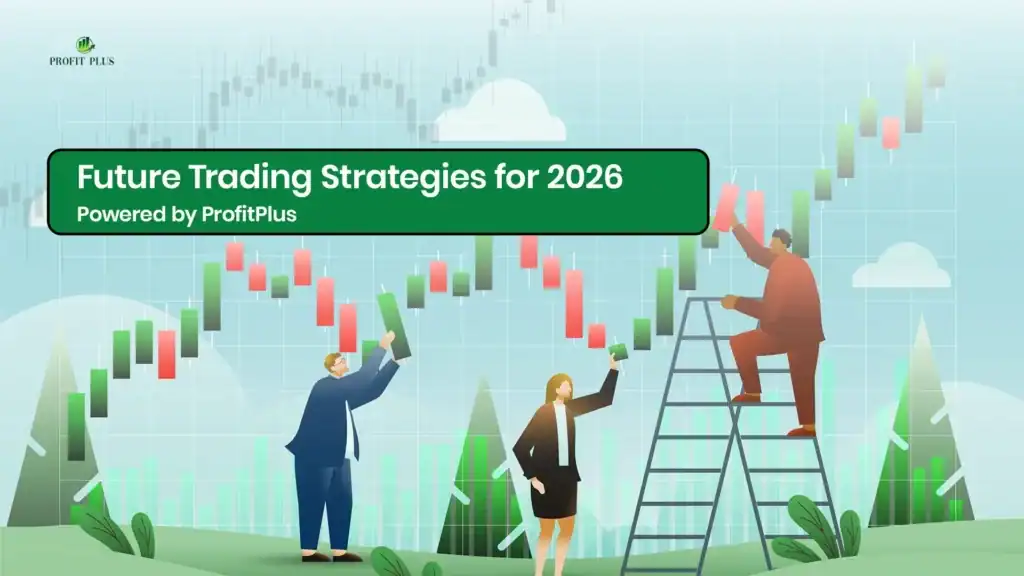
Futures trading continues to evolve rapidly in 2026, blending traditional technical strategies with data-driven analytics and automated systems that adapt to dynamic markets. Whether you’re a seasoned trader or just starting out, understanding the best strategies and how ProfitPlus can support you will dramatically improve your performance and confidence in the market.
In this comprehensive guide, we’ll break down the top futures trading strategies for 2026, explain why they work, and show how you can combine them with smart technology to stay ahead.
Trend Following: Ride the Market Direction
Trend following remains one of the most reliable futures trading strategies in 2026. The idea is simple: once a trend forms, it tends to persist long enough for disciplined traders to capitalize on it. Indicators such as moving averages and the Average Directional Index (ADX) help confirm trend strength and direction.
How to Trade It
- Use moving averages (e.g., 20- & 50-period) to confirm trend direction.
- Enter long in uptrends and short in downtrends.
- Apply trailing stops to lock in profits as the trend continues.
This approach works well in perpetual trends driven by macroeconomic drivers, such as commodity supply shifts or major central bank policy changes.
Breakout Trading: Capture Explosive Moves
Breakout strategies aim to enter the market when the price decisively moves beyond key resistance or support levels. Breakouts often lead to powerful price moves, giving traders the opportunity to benefit from volatility.
Steps to Use
- Identify consolidation zones and mark support/resistance.
- Wait for a high-volume break above/below these levels.
- Confirm with volume or volatility tools to reduce false signals.
Breakout trading can work across many futures markets from E-mini-indices to energy and agricultural contracts especially when market fundamentals change suddenly.
Pullback Strategy: Precision Entries
Instead of chasing a trend, the pullback strategy waits for a temporary retracement within a trend before entering. This offers better risk/reward profiles and greater entry precision.
How Pullbacks Help
- Enter after a trend resumes from a retracement.
- Use Fibonacci levels or moving averages as guides.
- Set tight stop losses below the recent swing low.
Pullbacks reduce risk by getting involved at more favorable entry points with defined exits.
Spread Trading: Managed Risk Approach
Spread trading involves buying one futures contract and selling another related one, profiting from the difference (or spread) rather than outright price moves.
Types
- Calendar spreads: Different expiration months of the same commodity.
- Inter-market spreads: Related markets (e.g., crude vs. heating oil).
Spread strategies can lower volatility exposure and are especially effective for traders who want steadier performance.
Momentum Strategies: Ride Acceleration
Momentum strategies look to capture rapid price movement by monitoring how fast and in what direction prices are moving. Indicators like RSI and MACD help signal strong momentum phases.
What Works
- Enter when momentum indicators confirm trending force.
- Combine with volume spikes for confirmation.
- Exit on divergence or loss of momentum.
This strategy suits active traders focusing on market acceleration, particularly in high-liquidity futures like stock indices and currencies.
Quantitative Order Flow Analysis: Data-Driven Edge
In 2026, algorithmic models and data analytics play an increasing role in futures markets. Quantitative order flow analysis, examining buy/sell order dynamics and provides insights into emerging price movements before they are fully reflected in price charts.
Why It Matters
- Spot shifts in liquidity and institutional activity.
- Anticipate reversals before common technical signals.
- Combine with trend or breakout strategies for timing precision.
Advanced traders increasingly deploy this method to gain an edge, especially in fast-moving contracts.
Risk Management: The Foundation of Success
No strategy works consistently without robust risk control. Futures trading is inherently leveraged, so disciplined risk management is essential.
Risk Rules to Follow
- Use stop losses and trailing stops strictly.
- Limit exposure per trade to a fixed percentage of your capital.
- Diversify across contracts and strategies.
Many professional traders emphasize survival; staying in the game long enough to profit rather than chasing every opportunity.
Automated Strategies & AI Integration
2026 is seeing a rise in automated systems and AI-driven trading. These tools can scan multiple markets, execute precisely, and remove emotional bias, a major plus for futures traders under pressure.
Benefits
- Faster execution with less latency or slippage.
- Multi-factor signal confirmations across timeframes.
- Backtesting and optimization at scale.
This is where technologies on platforms like Profitplus become especially valuable.
How ProfitPlus Helps in Futures Trading
ProfitPlus offers an AI-enabled futures trading bot and analytics suite that supports traders in 2026 by automating execution and enhancing decision-making. The system monitors markets 24/7, interprets real-time data, and executes trades with precision, removing emotional bias and helping traders act on high-probability setups.
Unlike many static tools, ProfitPlus adapts to changing market conditions, offers proven algorithms, and simplifies complex analysis allowing even newer traders to trade with confidence while learning profitable strategy patterns. Its automated capabilities give traders the freedom to capture opportunities efficiently across futures markets such as indices, commodities, and currencies.
Putting It All Together in 2026
To succeed in futures trading this year, combine adaptive strategies with disciplined risk management and the right technology:
- Use trend and breakout strategies for directional insights.
- Apply pullbacks and spreads for timing precision & risk control.
- Integrate quantitative analysis where data permits. Use AI and automation to handle execution and analytics in real time.
Markets in 2026 are driven by faster information flows, unpredictable macro shifts, and greater participation from retail and institutional traders alike. Your edge comes from disciplined strategy selection, smart execution, and tools that support your workflow.
Conclusion
By mastering these futures trading strategies and pairing them with automated support from platforms like Profitplus, traders in 2026 can navigate volatility with greater precision, reduce emotional decisions, and enhance long-term performance.
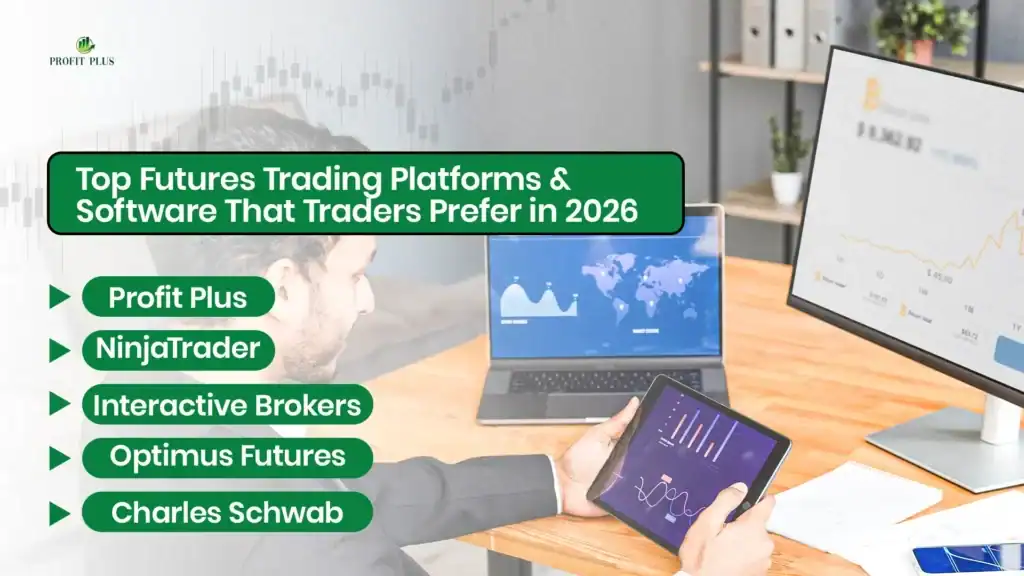
In the fast moving world of futures trading, the right platform and software can make a real difference between consistent growth and costly mistakes. As markets continue to evolve in 2026, traders in the United States are looking for platforms that deliver speed, reliability, automation, and smart risk control. The trading software you choose directly affects how efficiently you enter and exit trades, analyze market data, manage risk, and execute strategies.
For users of Profit Plus and readers of profitplus.us, this guide explains the most trusted futures trading platforms used today, with a strong focus on how Profit Plus software fits into modern futures trading needs.
Profit Plus - AI Powered Software for Smart Futures Trading
At the top of the list is Profit Plus own futures trading software. It is built to support traders who want automation, accuracy, and data driven decisions without complex manual analysis. Profit Plus focuses on AI assisted trading that continuously monitors market conditions and executes trades based on predefined strategies.
Unlike traditional platforms that require constant screen time, Profit Plus aims to simplify futures trading by combining automation with real time insights.
Key Strengths of Profit Plus Software
The platform offers automated trading features designed to execute trades efficiently based on market signals. Real time market monitoring helps traders react to price movements without emotional interference. The interface is built to be simple and easy to use, making it suitable for both beginners and experienced traders.
Profit Plus is especially useful for traders who want a hands free trading experience while still maintaining control over risk and strategy execution.
NinjaTrader - Professional Futures Trading Platform
NinjaTrader remains one of the most popular futures trading platforms in the United States in 2026. It is widely used by active and professional traders who need advanced charting and strategy customization.
The platform provides detailed market analysis tools and supports automated trading through scripting. It also offers simulation features that allow traders to test strategies before going live.
NinjaTrader is best suited for traders who want deep technical control and advanced trading capabilities.
Interactive Brokers (Trader Workstation – TWS)
Interactive Brokers is known for its powerful trading infrastructure and global market access. Its Trading Workstation platform supports futures trading with advanced analytics and fast execution.
Traders prefer Interactive Brokers for its competitive pricing, broad market coverage, and customizable trading environment. The platform is suitable for experienced traders who manage multiple asset classes alongside futures.
Optimus Futures Flexible and Cost Effective Platform
Optimus Futures is another platform favored by futures traders in 2026. It provides access to multiple professional trading tools while keeping costs reasonable.
The platform supports various charting and data solutions and allows traders to customize their setup based on their trading style. Optimus Futures works well for both beginners and intermediate traders looking for flexibility without unnecessary complexity.
Charles Schwab Thinkorswim Platform
Thinkorswim by Charles Schwab is a trusted name among US traders. It offers a balanced mix of advanced futures trading tools and educational resources.
The platform is known for its intuitive design, strong charting features, and reliable performance across desktop and mobile devices. It is a solid choice for traders who want a stable platform supported by a well established financial institution.
TradeStation Advanced Tools for Active Traders
TradeStation is designed for traders who rely on in depth analysis and automated strategies. It offers powerful charting, backtesting, and strategy development tools.
Futures traders prefer TradeStation for its professional level execution and ability to analyze historical data. It is ideal for those who want to combine futures trading with systematic strategy building.
Key Features Traders Look for in Futures Trading Software
When selecting futures trading software in 2026, traders focus on several essential features. Real time market data is critical for making fast and informed decisions. Automation and trading bots help reduce emotional trading and allow strategies to run continuously. Customizable charting tools enable traders to analyze price behavior more clearly.
Multi device access ensures traders can monitor positions from anywhere. Educational resources and customer support also play an important role, especially for newer traders.
Final Thoughts
Choosing the right futures trading platform in 2026 depends on your experience level, trading goals, and preferred trading style. Profit Plus stands out for traders who want AI powered automation and simplified futures trading. Other platforms such as NinjaTrader, Interactive Brokers, Optimus Futures, Charles Schwab, and TradeStation continue to be trusted by traders who prefer more manual control and advanced analytics.
By focusing on execution quality, automation features, ease of use, and risk management tools, traders can select a platform that aligns with their long term futures trading success.
Understanding futures trading hours is one of the most important steps for becoming a successful trader. Many traders focus only on strategies and indicators, but timing plays a major role in profitability. Knowing when to trade futures can help you find better liquidity, tighter spreads, and stronger price movements.
In this guide, we will clearly explain futures trading hours in the US, the best times to trade, and how traders can use market timing to improve results.
What Are Futures Trading Hours?
Futures markets allow traders to buy and sell contracts almost 24 hours a day, unlike stock markets that have fixed opening and closing times. Most US futures contracts are traded on the Chicago Mercantile Exchange (CME).
While trading is nearly continuous, futures markets still follow a daily schedule that includes:
- Market open
- Active trading sessions
- Short daily maintenance breaks
Understanding these sessions helps traders avoid slow periods and focus on times when price movement is strongest.
US Futures Trading Hours Explained
Most major futures contracts follow this general schedule:
- Market Opens: Sunday at 6:00 PM ET
- Market Closes: Friday at 5:00 PM ET
- Daily Break: 5:00 PM to 6:00 PM ET (Monday to Thursday)
During this one-hour break, trading is paused for system maintenance.
Even though futures trade almost 24 hours, not all hours are equal when it comes to profit opportunities.
Why Futures Trading Hours Matter
Timing directly affects:
- Liquidity
- Volatility
- Bid-ask spreads
- Trade execution quality
Trading during low-activity hours often leads to:
- Slow price movement
- Higher slippage
- False breakouts
Professional traders focus on high-volume sessions where the market is active and efficient.
Best Times to Trade Futures for Maximum Profit
1. US Market Open (8:30 AM – 11:30 AM ET)
This is considered the best time to trade futures for many contracts.
Why it matters:
- Strong volume enters the market
- Major economic reports are released
- Institutional traders are active
- High volatility creates opportunities
Index futures like E-mini S&P 500, Nasdaq, and Dow perform especially well during this time.
2. Pre-Market Session (6:00 AM – 8:30 AM ET)
This session builds momentum before the US stock market opens.
Benefits:
- Early reactions to global news
- Setup for breakout trades
- Lower competition than peak hours
This period is popular among experienced traders who understand price behavior.
3. London and US Session Overlap (8:00 AM – 11:00 AM ET)
When European and US markets overlap, liquidity increases.
Why traders like it:
- Strong trend movements
- Higher participation
- Clear direction in commodities and index futures
This overlap is ideal for day traders and scalpers.
Times to Avoid Trading Futures
Not all trading hours offer good opportunities.
Low-Volume Hours (5:00 PM – 11:00 PM ET)
During late US evening hours:
- Volume drops
- Price action becomes choppy
- Sudden spikes can occur without warning
Unless you are trading global events or automated systems, this period is usually best avoided.
Futures Trading Hours by Asset Type
Different futures contracts perform better at different times.
Index Futures
- Best: US market open hours
- High volatility and volume
Commodity Futures
- Energy futures react to US data
- Metals follow global sessions
- Agricultural futures peak during US hours
Currency Futures
- Active during London and US overlap
- Strong reactions to economic news
Understanding your asset’s active hours helps improve trade timing.
How Futures Trading Hours Affect Volatility
Volatility increases when:
- Economic data is released
- Markets open or overlap
- Institutional traders enter positions
High volatility can mean:
- More profit potential
- Higher risk
Smart traders use risk management tools and only trade during sessions that match their strategy.
Using Automation to Trade Futures at the Right Time
Many traders miss the best trading hours due to work or lifestyle constraints. This is where AI-based trading systems become useful.
At ProfitPlus, advanced automation helps:
- Monitor futures markets in real time
- Trade during optimal sessions
- Reduce emotional trading
- Improve execution consistency
Automated systems can follow rules without fatigue and react instantly when conditions align.
Final Thoughts
Futures trading hours are not just a schedule; they are a strategic advantage. Trading during the most active sessions can significantly improve trade quality and consistency.
Key takeaways:
- Futures trade nearly 24 hours, but timing matters
- US market open offers the best opportunities
- Avoid low-volume periods
- Match your strategy to market sessions
- Use technology to stay consistent
By understanding futures trading hours and choosing the right times to trade, traders can improve decision-making and increase their chances of long-term success.

Futures trading looks straightforward on the surface, but the moment a contract expires is where many traders get confused. If you are using an online platform like profitplus.us, it is important to understand how expiry works and what you should do before that final moment arrives. A futures contract is not open forever. It has a fixed expiration date that signals the end of its trading life and triggers the settlement process. Knowing what happens at this stage helps you avoid unexpected obligations or losses and keeps your trading strategy under control.
Understanding What Expiry Really Means
A futures contract trades actively until its expiration date. Once that date arrives, the exchange determines the final settlement price based on the market value of the underlying asset. From that point on, the contract is no longer available for trading. You cannot buy, sell, or modify it. It becomes inactive and moves into settlement.
Many popular futures contracts, especially financial index futures, have fixed quarterly expiries such as March, June, September, and December. Commodity contracts have monthly cycles depending on the product. This structure helps traders plan their positions well in advance.
What Happens at Expiry: Cash Settlement or Physical Delivery
Every futures contract settles in one of two ways. The process depends on the type of contract. Some contracts settle in cash, while others involve physical delivery.
Cash-settled futures are the most common among financial traders. When these contracts expire, the difference between your entry price and the final settlement price is either credited or deducted from your trading account. You do not receive or deliver anything. The entire process happens through price adjustment only.
Physically delivered futures work differently. If you are holding a commodity contract such as oil, metals, or agricultural produce at the moment of expiry, you may be obligated to accept delivery of the actual asset. Similarly, if you are on the seller side, you may be responsible for delivering the asset. Most retail traders do not want to manage storage or transportation, so understanding the settlement type is extremely important.
Why Most Traders Close or Rollover Early
Even though expiry triggers settlement automatically, most traders prefer to close or rollover their positions before the final day. Closing a position simply means taking the opposite trade to end your exposure. Rollover means exiting the current contract and entering the same instrument with the next available expiry month.
This is a common choice among active traders for several reasons. As expiry approaches, liquidity in the expiring contract usually decreases. Traders begin shifting their volume to the newer contract. When liquidity drops, the bid and ask spread may widen and price action often becomes unstable. Many traders experience slippage or poor execution if they wait too long. Rolling over early helps avoid these issues while keeping your market exposure active.
What Happens If You Do Nothing
If you allow a futures contract to expire without closing it, the exchange handles the settlement for you. In a cash-settled contract, you will simply see your profit or loss added or removed from your account balance. The contract then disappears from your open positions and is considered fully settled.
In physically delivered contracts, doing nothing can lead to obligations you were not expecting. You may be required to accept or deliver the actual underlying commodity. For retail traders who trade through online platforms or trading websites, this outcome is usually not desirable. Because of that, most brokers send reminders days before expiry so traders can take action if needed.
Risks and Benefits of Holding Until Expiry
Holding a futures contract until the final settlement can have advantages, but it also carries risks. If the market moves in your favor, holding to expiry can help you capture the full value of the price movement. This is especially useful for traders who are hedging rather than speculating. Hedgers often plan to keep their contracts until expiry because it aligns with their underlying business needs.
However, the risks are also significant. Futures are leveraged products, which means losses can build quickly if the market moves against you. In the final days leading up to expiry, volatility can increase because participants adjust their positions. Lower liquidity can make trade execution more difficult. And in the case of physical delivery, you may face costs and responsibilities that you were not prepared for.
Understanding the nature of your contract helps you decide whether holding to expiry aligns with your trading plan.
How to Prepare for a Smooth Expiry
Managing futures expiry effectively requires awareness and planning. First, always review the contract specifications so you know whether it settles in cash or through physical delivery. Second, keep an eye on liquidity. When volume starts shifting to the next contract month, consider rolling over your position. This ensures smoother execution and reduces risk.
It is also important to maintain enough margin in your account, especially if you plan to hold the position close to expiry. Sudden price swings can trigger margin calls or forced liquidation. Planning ahead helps prevent these surprises and keeps your strategy stable.
Many traders create an internal rule to rollover a few days before expiry to avoid unnecessary complications. Having a clear routine ensures consistency and reduces emotional decision-making.
Final Thoughts
When a futures contract expires, everything depends on the type of settlement and how you manage the position. With the right preparation, expiry becomes a predictable part of the trading process rather than a stressful event. Whether you choose to close, rollover, or hold until the final settlement, understanding the rules helps you stay in control.
If you trade through profitplus.us or any similar platform, always make sure you have a clear plan for handling contract expiry. A well-managed expiration strategy protects your capital, avoids unexpected obligations, and keeps your trading journey smooth and confiden
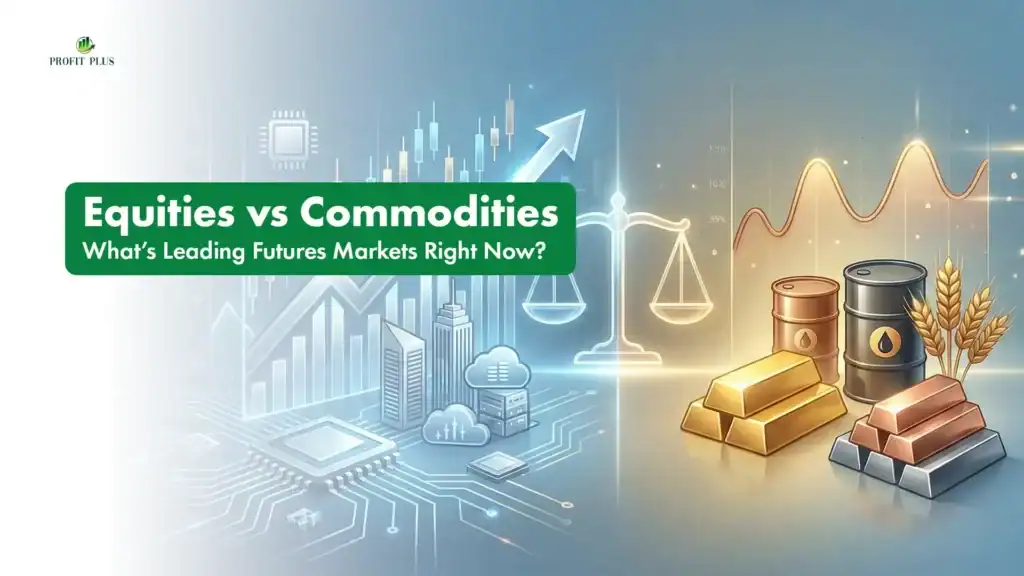
Futures markets are the battleground for global risk, macro trends, and trader sentiment. Whether you trade manually or use a futures trading bot, understanding whether equities or commodities are leading at a given moment can make the difference between profit and losses. In this post, written for readers of ProfitPlus.us, we explore what is steering futures markets today and how you can adapt.
What Determines Leadership: Equities or Commodities?
Futures are contracts that let traders bet on the future price of assets, from stock indexes to oil or gold. Which asset class leads often depends on:
- Economic conditions such as growth or uncertainty
- Investor sentiment such as risk-on or risk-off
- Supply and demand fundamentals for commodities or corporate earnings and innovation cycles for equities
As of late 2025, both equities and commodities are showing life but under different drivers.
Equities: When Tech, AI and Liquidity Drive the Move
Strong liquidity and broad participation
One reason for equities lead is liquidity. Futures tied to major stock indexes, such as E mini–S and P 500 futures, remain among the most traded contracts globally. This heavy trading volume ensures that equity futures often react quickly to earnings, policy signals, or major news.
Innovation and sector leadership
In 2025, technology and AI related companies have driven much of the upside in stock markets. Broad index rallies driven by investor enthusiasm for AI have pushed equity futures higher. Advances and market optimism have made equities, particularly in tech heavy indexes, a preferred choice for traders seeking growth.
Fast reaction to macro and sentiment
Equity futures often act as a barometer of investor confidence. When earnings are strong and macro-outlooks appear stable, these contracts tend to lead. Since index futures trade nearly 24 hours a day five days a week, they respond quickly to overnight or global developments, giving them an advantage over ETFs or cash equities.
Implication for traders and bots:
If you run a futures trading bot, equity futures allow automated strategies to capture rapid moves triggered by corporate or macro news. Thanks to strong liquidity, slippage and execution risks are often lower compared to many commodity futures.
Commodities: When Macro Risk, Supply, or Inflation Take Over
While equities often shine during growth periods, commodities step into the lead when macro uncertainty, inflation concerns, or supply and demand imbalances dominate.
Inflation, rate expectations, and safe haven demand
Commodities like gold benefit when investors fear inflation or anticipate changes in central bank policy. When equities become volatile or when economic growth looks uncertain, commodities, especially precious metals, attract safe haven flows. In 2025, gold and certain commodity classes have outperformed some equity benchmarks as investors look for protection.
Real demand and supply shocks affecting energy, metals, and raw materials
Some commodities depend on real-world supply and demand. Metals used in infrastructure or energy, especially those tied to green energy expansion or AI data centers, have seen rising demand. Futures for industrial metals and energy commodities continue to draw attention as global needs change. When supply constraints arise because of geopolitics, production issues, or natural disasters, commodity futures can lead strongly and independently from equity movements.
Diversification and hedging benefits
Commodity futures often move differently compared to equity futures. This makes them useful for hedging during periods of equity risk. Traders seeking to diversify or protect capital may shift into gold, oil, or other commodity futures when uncertainty rises.
Implication for traders and bots:
If your strategy involves macro risk hedging or diversification, adding commodity futures exposure can help. However, commodity futures can be more volatile and more heavily influenced by geopolitical or environmental factors, so strong risk management is essential.
Evidence from 2025: Mixed Signals and Active Markets
Recent market activity shows both patterns, with equity futures rallying and certain commodities showing strength or rebounding. Examples include:
- U.S. stock index futures showing strength as tech and AI enthusiasm lifts key indexes
- Commodity contracts in metals and energy gaining attention as global demand increases in areas such as green energy and supply chain restructuring
- Gold and industrial metals outperforming during periods of equity weakness or macro uncertainty
This indicates that there is no fixed leader. Leadership rotates based on market conditions, and smart traders follow the rotation.
How to Know Who Is Leading: A Simple Framework
Here is a practical checklist you can use manually or in a futures trading bot to spot whether equities or commodities are likely to lead next:
- Check macro indicators such as inflation expectations, central bank signals, currency strength, and geopolitical tension. Macro stress usually favors commodities.
- Watch earnings and sector trends. Strong tech and large cap earnings favor equity futures.
- Analyze volume and liquidity. High open interest and strong participation in index contracts signal equity leadership.
- Monitor commodity fundamentals such as supply changes, production cuts, inventory levels, and real demand.
- Watch correlations. If equities and commodities move together, broad sentiment is driving. If they diverge, leadership is rotating.
- Use strict risk controls. Whether manual or automated, position sizing and stop loss rules are essential.
What This Means for Traders and Futures Trading Bots
- Flexibility is critical. Market leadership switches between equities and commodities.
- Diversifying across both asset classes helps manage volatility.
- Using bots can improve timing, but the logic must account for macro conditions and cross market fundamentals.
- Staying data driven is far more effective than relying on predictions or hype.
For example, during a strong tech earnings environment, a bot may prioritize E mini S and P 500 futures. In periods where inflation or energy supply concerns dominate, the same bot may shift into gold or energy futures or hedge existing positions.
Conclusion
Equities lead when liquidity, innovation, and growth momentum dominate. Commodities lead when macro uncertainty, inflation pressure, or supply and demand shocks take center stage.
As a trader or operator of a futures trading bot, your strength comes from staying flexible, tracking market signals, and adjusting your strategy as leadership rotates. By monitoring macro indicators, liquidity shifts, sector trends, and commodity fundamentals, you can position yourself on the right side of the market.
When you're ready to start investing or trading, one of the biggest questions you'll face is choosing between futures, options, and stocks. Each of these financial instruments offers different opportunities, risks, and rewards. Understanding how they work and which one aligns with your goals can make all the difference in your trading success. Let's break down these three popular trading choices in simple terms so you can make an informed decision.
Understanding Stocks: The Foundation of Investing
Stocks represent ownership in a company. When you buy shares of Apple, Amazon, or any publicly traded company, you become a partial owner of that business. If the company performs well and grows over time, your investment increases in value, which is how you make money from stocks. This straightforward concept makes stocks the most accessible entry point for beginners.
Many brokerages now allow you to open investing accounts with zero minimum deposits, and you can start with as little as ten or twenty dollars thanks to fractional shares. This low barrier to entry makes stocks particularly attractive for new investors who want to start small and learn as they go. Additionally, some stocks pay dividends, providing regular income even if the stock price doesn't move much.
The risk with stocks is typically moderate compared to other instruments. You can only lose what you invest, and while prices fluctuate based on company performance and market conditions, long-term stock investors have historically seen solid returns. The S&P 500 index of large-cap U.S. stocks has delivered an average annualized return of around ten percent over the long term. For investors with patience and a long-term mindset, stocks offer a proven path to building wealth.
Options: Flexibility with Complexity
Options are derivative contracts that give you the right, but not the obligation, to buy or sell an asset at a predetermined price by a certain date. A call option gives you the right to buy, while a put option gives you the right to sell. The key word here is "right," not "obligation," which is what separates options from futures.
Options offer tremendous flexibility. You can use them to speculate on price movements, hedge existing investments, or generate income through various strategies. However, options bring complexity with factors like time decay and the Greeks, which measure how different variables affect option prices. This complexity can make options trickier to navigate for beginners.
One major consideration with options is time decay. Options contracts can lose one hundred percent of their value if the underlying asset doesn't move as expected, because options are depreciating assets. When you buy an option, you pay a premium upfront, and if the market doesn't move in your favor before expiration, that premium is lost entirely. This makes timing crucial in options trading.
For stock options specifically, there's another limitation to consider. When day trading stock options, regulations require traders to maintain a minimum account balance of twenty-five thousand dollars, which can be a high barrier for new traders. This pattern day trading rule doesn't apply to futures, giving futures an advantage for traders with smaller accounts.
Futures: Direct Market Exposure with Higher Leverage
Futures are standardized binding contracts to buy or sell an asset at a set price on a future date, and unlike options, futures obligate both parties to complete the transaction. Futures contracts are widely used for commodities like oil and corn, as well as financial instruments like stock indices and currencies.
Futures pricing is straightforward and driven directly by the price of the underlying asset, making futures easier to value than options. You're essentially trading pure price action without worrying about time decay, volatility calculations, or complex pricing models. This simplicity appeals to many traders who want a more transparent trading experience.
Futures trading generally requires a lower initial account opening capital compared to stocks and options, and there's no pattern day trading rule requiring a minimum twenty-five-thousand-dollar balance. In fact, you can start trading micro futures contracts with just a few hundred dollars, making futures accessible even for beginners with limited capital.
Another significant advantage of futures is trading hours. Futures offer virtually24 hours trading except on weekends, allowing you to react to breaking news and market opportunities whenever they arise. If a major economic report drops at night or over the weekend, futures traders can act immediately rather than waiting for the stock market to open.
Comparing Risk Levels Across All Three
Risk is a crucial factor when choosing between these instruments. Stocks carry moderate risk because your loss is limited to your initial investment. You can't lose more than you put in, which provides a natural safety net for investors.
Options present a different risk profile depending on whether you're buying or selling. Buyers of options pay the premium upfront and have limited risk equal to the premium paid, while sellers of uncovered options can face margin requirements and potentially unlimited losses. This makes buying options relatively safer than selling them, though both strategies have their place.
Futures trading generally carries more risk similar to stock trading in that you have sizable risk from price movements, while options can offer defined risk strategies with smaller monetary exposure. The obligation to fulfill the contract and the leverage involved mean futures can result in losses exceeding your initial margin deposit if you're not careful with risk management.
Which Should You Choose?
The answer depends entirely on your goals, experience level, and risk tolerance. If you're a complete beginner with a long-term investment mindset, stocks or stock ETFs are usually the best starting point. Rather than trying to pick individual growth stocks, beginners should consider buying a simple S&P 500 index ETF, which provides instant diversification across hundreds of major companies. This reduces risk while still offering exposure to market growth.
For traders interested in generating income or hedging existing positions, options might be appropriate once you've built some experience and understand the mechanics. Options work well for investors who want to express specific market views or protect their portfolios against downside risk. However, commit time to learning about options pricing and strategy before putting real money at risk.
If you're drawn to active trading with lower capital requirements and prefer straightforward price action, futures could be your best choice. Futures are popular among day traders because of their liquidity, extended trading hours, low capital requirements, and transparent pricing. Futures markets, especially in key contracts like the E-mini S&P 500, are recognized for having high liquidity, which keeps bid-ask spreads tight and makes it easier to enter and exit positions.
Final Thoughts
There's no universal "best" choice among futures, options, and stocks. Each instrument serves different purposes and attracts different types of market participants. Many successful traders and investors use all three at various times depending on market conditions and their specific goals.
Start by honestly assessing your experience level, available capital, time commitment, and risk tolerance. Beginners typically benefit most from starting with stocks or stock ETFs to build foundational knowledge. As you gain experience and confidence, you can explore options for more sophisticated strategies or futures for active trading opportunities. Remember that education is your most valuable investment. Take time to learn, start small, and gradually expand your trading activities as your skills develop. The markets will always be there, so there's no rush to jump into complex instruments before you're ready.
Gold futures allow traders to buy or sell gold at a future date for a set price. Unlike owning physical gold, trading gold futures gives you exposure to price movements with less capital. It is a popular way for investors, traders, and institutions to manage price risk or take advantage of short-term price changes in the gold market.
What Exactly Is a Gold Futures Contract
A gold futures contract is a standardized agreement traded on an exchange to buy or sell a specific amount of gold at a fixed price on a set date in the future. The most active gold futures contracts in the United States trade on the CME Group.
Each contract has its own size, tick value, and delivery month. The standard gold futures contract, known as GC, covers 100 troy ounces. There are also smaller options such as the Micro Gold (MGC) and 1-Ounce contracts, which make it easier for retail traders to participate with lower capital requirements.
How Gold Futures Work in Practice
When you trade a gold futures contract, you do not need to pay for the entire value of the gold. Instead, you deposit a portion of it called margin. This margin acts as a security deposit and lets you control a larger position with a smaller investment.
This concept is known as leverage. It increases both potential profits and potential losses. For example, if the price of gold moves in your favor, the returns can be significant. However, if it moves against you, the losses can also be large. Exchanges and brokers set the margin requirements and may change them based on market conditions.
Common Contract Choices for U.S. Traders
Standard Gold (GC) – This is the main contract, representing 100 troy ounces of gold. It is highly liquid and widely used by institutional investors and professional traders.
Micro Gold (MGC) – This contract is one-tenth the size of the standard contract, typically representing 10 ounces of gold. It is perfect for new or smaller traders who prefer lower capital exposure.
1-Ounce Contract – This contract allows for even smaller participation and provides flexibility for traders who want to manage risk in smaller portions.
Who Uses Gold Futures and Why
Gold futures are used by two main groups: speculators and hedgers.
Speculators trade gold futures to profit from short-term price changes. They can take long positions if they believe prices will rise or short positions if they expect prices to fall.
Hedgers, such as gold producers, refiners, and jewelers, use gold futures to protect against price risk. For example, a jeweler who expects gold prices to rise might buy futures to lock in a lower price now for future delivery.
Key Benefits of Trading Gold Futures
Capital Efficiency
Gold futures allow traders to control large amounts of gold with only a fraction of the total value, thanks to margin requirements.
Liquidity and Transparency
Because gold futures are traded on regulated exchanges, prices are transparent and easily available. The high volume of trading provides strong liquidity for both buyers and sellers.
Flexibility
Traders can easily buy or sell gold without physically owning it. Futures also make it easy to take short positions, allowing traders to profit from both rising and falling markets.
Important Risks to Understand
Leverage Risk
Leverage can magnify both gains and losses. A small price move in gold can lead to large changes in your account value, so it’s important to manage your risk carefully.
Margin Calls
If the market moves against your position, your broker may require additional funds to maintain your position. If you fail to meet the margin call, your position may be closed automatically.
Market Volatility
Gold prices are affected by inflation, interest rates, currency values, and geopolitical events. Sudden changes in any of these factors can cause sharp movements in gold futures prices
How to Start Trading Gold Futures in the U.S.
- Choose a Futures Broker: Open an account with a regulated broker that offers access to the CME Group. Make sure the broker is reliable and has experience handling futures accounts.
- Understand the Contract Specifications: Before trading, learn the details of the contract you plan to trade, including size, margin, tick value, and expiration dates.
- Create a Trading Plan: Develop a clear strategy before entering the market. Set your profit targets, stop losses, and risk limits. Only trade money you can afford to lose.
- Start Small and Use Risk Controls: Begin with smaller contracts like Micro Gold. Use stop orders to limit potential losses and protect your trading capital.
Practical Tips for Successful Gold Futures Trading
- Start with a demo account to practice before trading real money.
- Always follow the gold market and watch key factors like inflation, the strength of the U.S. dollar, and interest rate changes.
- Stay updated with global news and economic data that could influence gold prices.
- Keep emotions under control and trade based on strategy, not impulse.
- Regularly review your trades to learn from both gains and losses.
Conclusion
Gold futures trading offers a smart and flexible way to participate in the gold market without owning physical metal. It provides opportunities for both hedging and speculation while giving traders access to global price movements.
However, success in gold futures trading depends on proper knowledge, planning, and risk management. By understanding how futures work, using the right strategies, and controlling leverage, traders in the U.S. can take advantage of one of the most actively traded commodities in the world.
In recent years, U.S. traders have shown increasing interest in using trading bots on futures platforms. These automated tools, software programs that execute trades based on preset rules or algorithms are gaining ground for a number of reasons. In this article, we’ll explore why they’re becoming popular, and how you can approach them with awareness and care.
1. What’s driving the trend
One major reason for the rising use of trading bots is efficiency. On futures platforms, such as those offering contracts in commodities, indices or cryptocurrencies, speed and accuracy matter. A bot doesn’t hesitate, eat, sleep or get emotional, it follows the rules you set. That means trades get executed without delay, and opportunities won’t slip away because the trader momentarily hesitated.
Second, bots bring consistency. Many human traders struggle with discipline: they see a gain, hope for more; or they see a loss, chase revenge trades. Bots stick to the defined rules, entry point, stop‑loss, target. That helps reduce the impact of emotional mis‑steps.
Third, there is better accessibility. Many futures platforms now offer APIs or integrate easily with automated tools. U.S. traders who once needed to monitor markets 24/7 can now rely on bots to watch certain conditions while they do other things work, sleep, spend time with family.
2. Why futures markets and U.S. traders align well with bots
Futures markets tend to offer high leverage, tight spreads and continuous trading hours (sometimes 24 hours a day, depending on the asset). That means opportunities and risks are both elevated. A bot can quickly respond to price swings or news events. For U.S. traders, using a well‑designed bot gives them a shot at seizing moves that might happen overnight or during times when they aren’t glued to their screen.
Also, U.S. regulatory frameworks and established institutions mean many futures platforms are mature, transparent and technologically advanced. That builds a foundation of trust for traders who are cautious about automation.
3. Benefits of Using Trading Bots
Here are some of the key advantages:
- Speed – Bots react immediately when conditions match the criteria you’ve defined.
- Emotionless execution – Bots don’t get nervous or greedy; they follow logic.
- Back‑testing and historical data – You can often test a bot’s rules on past data to see how it might have performed.
- Time‑saving – Instead of sitting watching charts, you set the bot and monitor.
- 24/7 potential – Some markets operate non‑stop; a bot can keep working while you sleep.
4. But there are Important Risks and Trade‑offs
Automation isn’t a magic bullet. Here are things to watch:
- Over‑reliance: Just because a bot worked in the past doesn’t guarantee future success. Markets change.
- Incorrect settings: If your rules are flawed, the bot will faithfully follow them—even if they lead to losses.
- Technical issues: Connectivity problems, platform downtime or bugs in the bot can lead to missed trades or losses.
- Emotional detachment: While a bot removes emotion, the human still needs to supervise and intervene when needed.
- Regulation & cost: Some bots come with fees or require subscriptions; you’ll want to verify the platform’s regulatory status and cost structure.
5. How to Choose and Use a Bot Wisely
If you’re a U.S. trader thinking about using a trading bot on a futures platform, here’s a suggested approach:
- Define your goal: Are you seeking steady small returns or high‑risk/high‑reward trades? The strategy will differ.
- Check the platform: Use a regulated and transparent futures platform with good reputation and customer support.
- Start small: Run the bot with a modest amount of capital first to understand how it behaves.
- Use back‑testing: If the bot allows historical simulation, test your rules to see how they might have performed.
- Monitor regularly: Even automated systems need human oversight. Markets shift, so review performance, tweak rules, or pause if conditions change.
- Maintain risk controls: Set stop‑losses, caps on how much to trade, and be ready to turn the bot off if needed.
6. The Outlook
Automation in trading is not new, but each year the tools improve, the data is richer, and more U.S. traders are willing to delegate parts of their process to bots, especially in fast‑moving futures markets. If used thoughtfully, trading bots can be an effective component of a trading plan. They are a tool not a replacement for education, strategy, discipline and risk management.
Conclusion
Trading bots on futures platforms are gaining ground among U.S. traders because they bring speed, consistency and time‑saving advantages. Yet, like any tool, they work best when the human behind them is informed, prepared, and in control. If you decide to explore this path, proceed with clear goals, careful selection, and continuous oversight. Used wisely, a trading bot can become a valuable part of your trading toolkit.